World will be a better place if we emphasise on what unites us, instead of what divides
Total Views |


Celebrate Oneness: Hindus can provide world a balanced view
• Swayamsevaks are active in virtually every sphere of human life
• RSS Sarsanghchalak concludes visit to three nations that he embarked to broaden and deepen civilizational dialogue
• Universal Oneness, Hindu Vishwa Bandhu, Celebrate Oneness were themes in his interactions at New York, Toronto and London
London, September 6, 2026
“If I have to mention a single principle, I would mention Apnapan, which means shuddha sattvik prem (pure, selfless love for everyone). That is the traditional nature of a Hindu: love for the individual, for the community, for society, and for humanity as a whole. Hindus can provide a balanced view of the world” said Rashtriya Swayamsevak Sangh (RSS) Sarsanghchalak Pujaniya Dr Mohan Bhagwat.
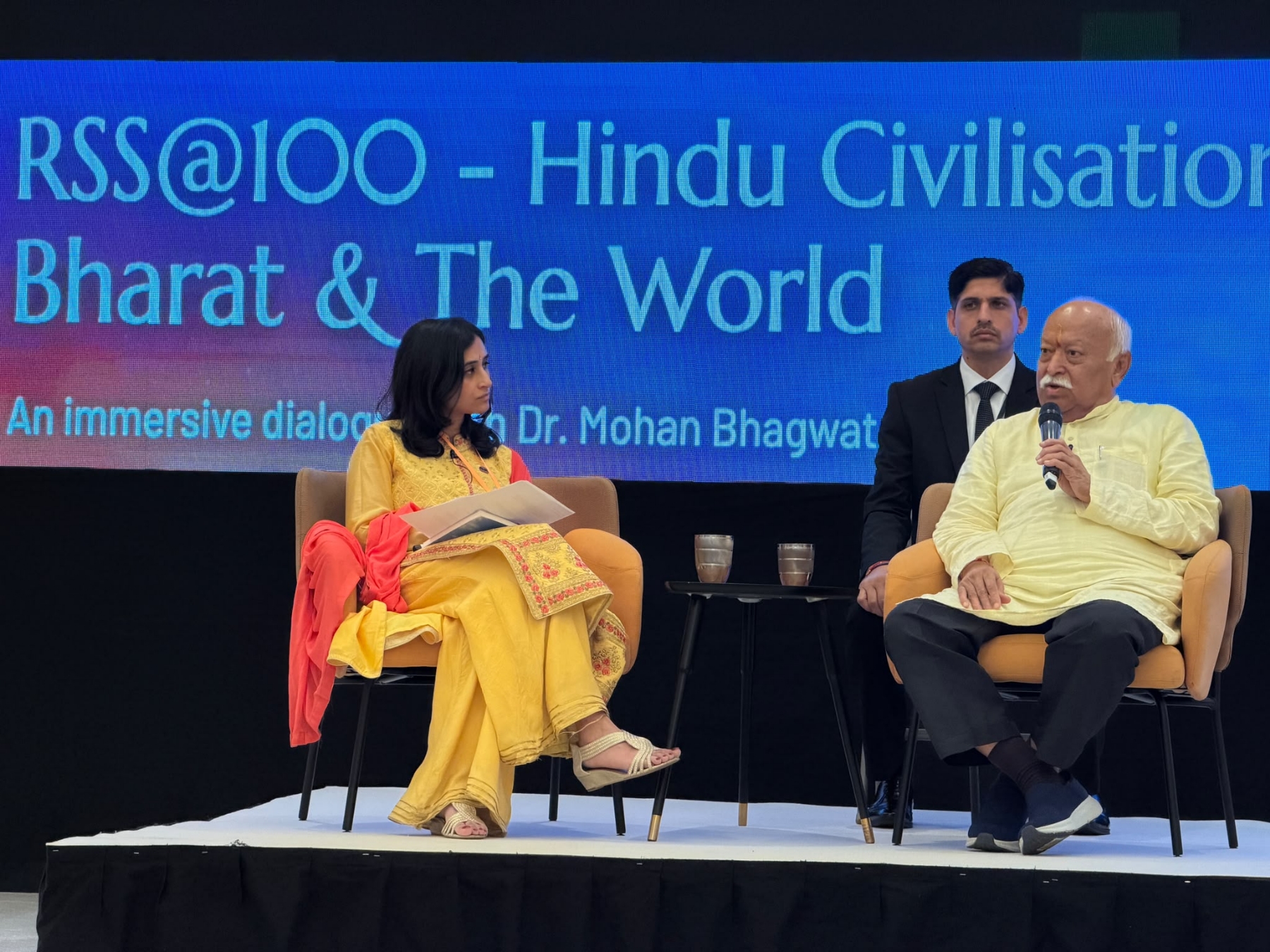
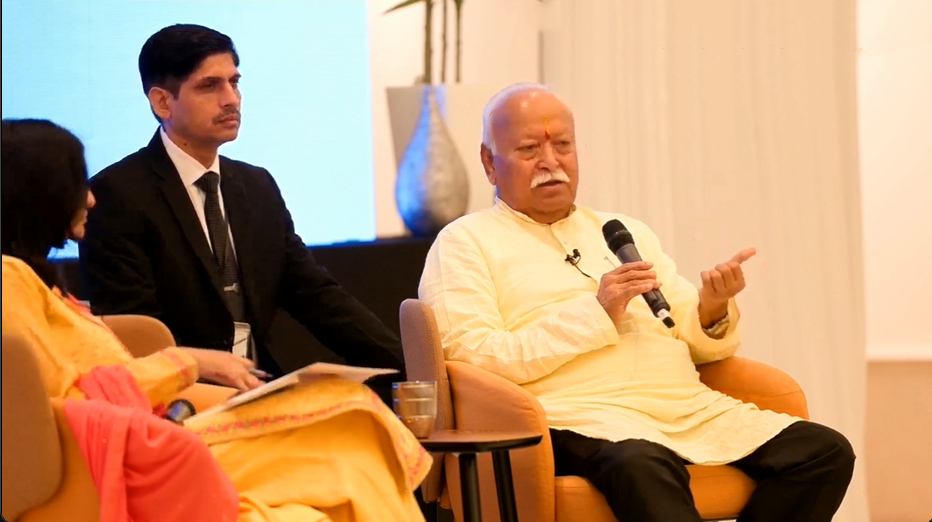
In an interaction with over 600 participants from 326 organizations on Sunday, Dr Bhagwat answered several questions relating to RSS journey of 100 years and what’s in store during next 100 years.
Dr Bhawat made this observation at ‘Celebrate Oneness’ event that was held in fire chat mode. He was answering a query on one element of the Sangh that has withstood test of time.
Spreading pure selfless love setting aside diversities and focusing on unity was one key themes in over one hour’s conversation with virtually ‘who’s who’ of Bharatiya community, faith leaders, dignitaries and those seeking to celebrate spirit of oneness.
With London’s ‘Celebrate Oneness’ event on September 6, RSS Sarsanghchalak Dr Mohan Bhagwat concluded his three nation tour touching US, Canada and United Kingdom during August 25 – September 07, 2026.
The visit was part of RSS centennial events to initiate a civilizational dialogue with global communities.
On Sangh Sewa activities, Dr Mohan Bhagwat said, “Swayamsevaks are active in virtually every sphere of human life, making it difficult to summarise the full extent of their work. Even those who oppose us for political reasons recognize the value of our work and the qualities of swayamsevaks.”
“From time to time, they seek our cooperation in crucial matters and engage in dialogue with us. This reflects the broad acceptance of our work across society. Where nobody is doing anything, Sangh is doing seva. From Ladakh to Kanyakumari,” Dr Bhagwat added.
On one piece of wisdom for next 100 years for the Sangh, Dr Bhagwat said, “Sangh has to continue the work it did, for the next hundred years of the Sangh.”
He added, “First thing that comes to my mind is, it should not take so long to complete all work. Already mine is third generation working. There are two more generations now in Sangh. So, five generations are working together. Before seventh generation, organising the Hindu society should be completed.”
On what Hindu civilisation brings to the world that is essential, he said, “All Hindu thoughts have been based on this single theme. There is a reason why there is karma. Existence is really one. It appears to be diverse. Diversity is our nature. So, we have to accept and we respect them. But we have to deal with diversities keeping in mind that these are the various decorations of unity of existence. One has become many therefore many are respected. All is one. On this basis, we deal with everything”.
On Hindutva or Hinduness, Dr Bhagwat emphasised, “The word Hindu, we cannot understand on the basis of any religious practice, religion or lifestyle. Hindu is a nature. Society needs nature to accept and respect all diversities, because it holds that all ways lead to the same goal.”
“All diversities are diversities of unity. So, when we look at that unity, then we can respect and accept all diversity. That thought is Hindu thought. That kind of nature is Hindu nature. That has been history of Hindu society and Bharat. So, when we say Hindu, it is not a religion. It is not merely a word.”
“There may be Hindu religions, but religions, despite their specific philosophies and practices, can exist within this broader Hindu civilisational framework,” he said on concept of 'Hindu Rashtra' and “Hindutva”.
Speaking on role of future generation, Dr Bhagwat was more confident about them as they had the urge to make the world a better place and were ready to shed their petty differences of all kinds for this purpose.
He said, “They are more honest. It naturally happens as we grow older. We go through so many experiences, so we become cautious. We don't speak freely all the time. We always think about what will happen because we know what may happen. “
“The younger generation does not have these experiences. If they find something right, they will just embrace it and do it. They are not worried about the consequences because they are young. So, if we give this purpose to them and provide them with the necessary knowledge and insights from our experience, without imposing on them, we should let them find their own way”
Pujaniya Sanrsanghchalak said that the duty of facing future challenges for Bharat is coming to young generation only to live their values. And therefore, in seva also, they will have to do that. Seva must be done selflessly. Seva is nothing which makes you great. It is not the upakar.
“It is not something being very compassionate and you are doing to humanity. We say seva is your chance to get nearer to God. You are not doing something good to those whom you serve. They are doing immense good to you by giving you the chance to serve. So seva should be done with this attitude” Dr Bhagwat said.
On loyalty of British Hindus that’s brought to question in both UK and Bharat, Dr Bhagwat said, “There is no conflict. If British Hindus are achhe, pakke, sachche Hindus, there will never be a conflict between British and Bharat's interests. If, at all, such a situation arises, it is obvious that British Hindus will go with Britain. Exceptions may happen, but Hindutva is clear on this.”
“Your karmabhumi is where your loyalty lies. Your Janmabhumi or the land of your origin or birthplace and your Punyabhumi are where you receive your values. You have to live those values in your Karmabhumi, serving the land where you live” RSS Sarsanghchalak said.
“If you look to the audience, or to society in general, human society in general, yes there is diversity; it's natural, we have to go through it. But you give your emphasis on what unites us instead of what divides us.”
“If we do that, our communities, our society will prosper, and world will be a better place. This is what we will have to do,” Sanrsanghchalak explained on perception that Hindus are not united and what was essence of unity?
Dialogue on ‘Celebrate Oneness’ was moderated by Mamata Subranhamnyam, a wellness expert based in the UK. The event was organised and initiated by Hindu Swayamsevak Sangh (HSS). Among those that were present included Members from House of Lords, MPs (Members of the House of Commons), Mayors, Councillors and High Commissioner of Bharat to UK Periasamy Kumaran, Deputy High Commissioner of Bharat to UK Kartik Pande and other leaders of community.
Celebrate Oneness dialogue began by paying homage to those that lost lives and families displaced by recent devastating Nepal floods. Sewa UK has raised 100,000 pounds through donations for relief efforts in Nepal.
Pujaniya Sarsanghchalak ji visit is part of RSS centenary events deepening and broadening the global civilisational dialogue on service, social harmony and shared values.
During his visit to London Dr Bhagwat met faith leaders, academics, researchers and other public figures. As part of interfaith engagement, he visited Shree Swaminarayan Mandir in Willesden, Khalsa Jatha British Isles Gurdwara and other religious places in London.
More than 326 community organisations and associations from across UK took part in Oneness celebration. Notably, 11 Language communities in UK, cross sections of Hindu society, attended the event.